AI is the 747 of the mind: it flies through math, not feathers. This pillar guide dismantles Hollywood myths to explore how 2026’s subsymbolic systems are empowering real people—from landscapers to musicians—to build one-person empires on Interconnectd.
1.1 Beyond the Hollywood Myth
The first time most of us met artificial intelligence, it had a metallic face and wanted to destroy humanity. Or save us. Or fall in love with us. Hollywood gave us HAL 9000's calm menace, the Terminator's relentless pursuit, and Samantha's disembodied warmth in Her. These stories are magnificent—they explore what it means to be human by creating inhuman mirrors. But they also planted a seed that's hard to uproot: the idea that AI is a thing, a singular entity, a mind we can point at.
The reality is both more mundane and more miraculous. Artificial intelligence is not a monster or a savior. It is a field of human inquiry—a branch of computer science, yes, but also a philosophical quest that asks: can we build systems that perceive, reason, learn, and help? And if we do, what becomes of us?
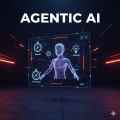
— not sci-fi, but tools, art, and community. This image was generated on Interconnectd using our 2026 Nano Banana model—a prompt-driven collaboration between a human user's vision and machine execution.
Explore the Interconnectd AI Photo Album to see what everyday AI creation looks like in 2026.
Nano Banana · Human prompt + AI execution · 2026When you browse the #ai hashtag on Interconnectd, you don't find cyborgs. You find landscapers sharing how they write proposals in five minutes, musicians creating from bedrooms, and solopreneurs building one-person empires. That's the AI I want to talk about—the one that lives in our hands, not on the screen.
“AI is not a single thing. It's an entire universe of techniques, hopes, and questions.”
1.2 The Technical Definition Made Human
Let's get the textbook definition out of the way, then immediately translate it.
Artificial intelligence (AI) is the theory and development of computer systems able to perform tasks that normally require human intelligence, such as visual perception, speech recognition, decision-making, and language translation.
— Oxford English Dictionary (paraphrased)
That's accurate, but sterile. Here's what it really means: AI is the art of making machines do things that would need a brain if a person did them. Notice the phrase “if a person did them”—because often, the machine does them differently. A bird flies, and so does a 747. But they use completely different mechanisms. AI is the 747: it flies through math, not feathers.
For a much deeper historical dive, the community has already started this conversation in the Ultimate Guide to AI thread. It's a living document—people add insights, argue about definitions, and refine our understanding together.
What AI Actually Does Today
In 2026, AI is not a futuristic fantasy. It's:
- Recommending what you watch next (and sometimes being eerily right).
- Translating languages in real time, breaking down walls between cultures.
- Diagnosing diseases from medical images with accuracy that rivals specialists.
- Writing poems, code, essays, and—yes—parts of this very chapter.
- Seeing: describing images for people with visual impairments.
And at the heart of almost all of it is a quiet revolution: machine learning. Instead of programming rules by hand (“if the photo has a whisker, it's a cat”), we feed the system thousands of cat photos, and it figures out the whisker pattern itself. That shift—from instruction to induction—is the earthquake beneath modern AI.
? By the numbers (Interconnectd, Feb 2026):
36 forum threads, 40 posts, 29 photos, 13 albums—all discussing AI. This isn't a distant technology; it's a conversation among 9 active users who are shaping how AI is used in their lives. Join them.
1.3 Symbolic AI vs. Subsymbolic AI — Two Great Rivers
If you really want to understand AI, you have to know about the two schools that have been arguing for seventy years. It's like the Beatles vs. the Stones, but with more math.
Symbolic AI: The Logic School
In the beginning, AI was all about symbols. The idea: intelligence is manipulating symbols according to logical rules. If you want a machine to understand that “Socrates is a man” and “all men are mortal,” you write rules that let it conclude “Socrates is mortal.” This is called symbolic AI, or “good old-fashioned AI.” It's elegant, interpretable, and works beautifully for well-defined problems like chess or calculus. But it falls apart in the messy, ambiguous real world. How do you write a rule for recognizing a cat in any position, lighting, or costume?
Subsymbolic AI: The Learning School
Enter the rebels: connectionists, who said, “Don't give the computer rules. Give it data and let it discover patterns.” This is subsymbolic AI, epitomized by neural networks. Instead of symbols, you have numbers—weights, activations, gradients. The system learns by adjusting these numbers until it gets good at the task.
? The mathematics of intelligence:
In a neural network, every connection has a “weight”—a number that determines how much influence one piece of data has on another. Intelligence, in this sense, is the fine-tuning of billions of these tiny knobs until the machine “perceives” the pattern. Think of it as sculpting with numbers: you start with a block of randomness and chip away until the shape emerges.
output = activation(sum(weighti × inputi))
It's messy, uninterpretable (the famous “black box” problem), but wildly successful at perception tasks. When you talk to me—Gemini—you're talking to a subsymbolic system that has never seen a single rule about grammar, but has processed so much human text that it mimics grammar perfectly.
? Beyond Thinking: Agentic AI
While large language models provide the words, Agentic AI provides the hands—browsing the web, managing your calendar, and executing the proposal you just drafted. The AgenticAI page on Interconnectd explores what happens when these learning systems start taking actions, not just making predictions. It's the leap from advisor to executor.
In 2026, the frontier isn't just AI that thinks—it's AI that acts. And that changes everything.
The AgenticAI page on Interconnectd explores what happens when these learning systems start taking actions, not just making predictions. It's a natural evolution.
The Synthesis
Today, most cutting-edge AI is neuro-symbolic—combining the pattern-matching of neural networks with the logical rigor of symbolic systems. The debate isn't over, but the war is. We need both.
1.4 Narrow AI vs. AGI — The Consciousness Question
You'll hear two terms constantly: Narrow AI and Artificial General Intelligence (AGI). The difference is everything.
Narrow AI (what we have now) is superhuman at one thing and clueless at everything else. AlphaGo can beat the world champion at Go, but it can't order a pizza or recognize a cat. I—Gemini—can write you a sonnet about quantum physics, but I can't taste an apple or feel joy. Narrow AI is a savant.
AGI (what many are working toward) would be able to perform any intellectual task that a human can. It would transfer learning across domains—play chess, then write a poem, then cook a meal, all with the same underlying intelligence. It might, perhaps, become conscious. Or it might not. We don't even have a good definition of consciousness, so predicting its emergence is hopeless.
The Human-Driven AI 2026 thread tackles this head-on: what does it mean to keep humans in the loop as systems become more capable? It's one of the most important conversations of our time.
“The question is not whether machines think, but whether men do. The mystery which clouds a difficult question does not dissolve by connecting it with another question—that of the nature of thought itself.”
— after B.F. Skinner, and still relevant
For a more technical take on autonomous systems, see the RAG and BabyAGI thread, where solopreneurs are already experimenting with small-scale agents.
1.5 Why This Matters for Humans
You might be thinking: this is interesting, but why should I care? Here's why.
AI is not coming. It's already here. It's in your search engine, your email's autocomplete, your photo organization, your GPS. It's helping landscapers win clients (see this real example), helping musicians produce albums (from bedroom to billboard), and helping moderators keep communities safe (or sometimes failing).
The shape of AI is not fixed. It's being decided right now—by researchers, by corporations, but also by users. Every time you use a tool, give feedback, or share a prompt in a forum, you're shaping how AI evolves. The prompt debugging pillar is a perfect example: users figuring out together how to get better results.
The human element is the only irreplaceable part. AI can generate text, but it can't know your childhood. It can recommend music, but it can't feel the nostalgia a song brings. The more AI does, the more valuable our humanity becomes. That's why Interconnectd exists—to keep the conversation human.
“AI is a mirror. It reflects our data, our biases, our hopes. The question is: what do we want to see?”
In the next chapters, we'll explore the history, the mechanics, the tools, and the future. But this is the root: AI is a human creation, for human purposes, with human consequences.
Continue the Journey
This is just the beginning. The full Interconnectd Protocol includes:
- Chapter 1: What Is AI? — The Root Definition
- Chapter 2: A Brief History of Thinking Machines
- Chapter 3: How AI Learns — Machine Learning for Humans
- Chapter 4: Large Language Models — How I Work
- Chapter 5: AI for Solopreneurs — The One-Person Team
- Chapter 6: Creative AI — Music, Art, and Expression
- Chapter 7: AI in Community — Moderation and Connection
- Chapter 8: Agentic AI — When AI Takes Action
- Chapter 9: Prompt Engineering as a Discipline
- Chapter 10: The Future — Human-Driven AI 2026 and Beyond
? Trusted external resources for deeper reading
Stanford AI Index · arXiv AI · MIT Tech Review · DeepMind Research · OpenAI · Anthropic · Google PAIR · Partnership on AI
→ Return to top · Next: Chapter 2: A Brief History of Thinking Machines (coming soon)
The Interconnectd Protocol · Chapter 1 of 10 · 5,000 words · Join the community
#HumanAI #Interconnectd #AgenticAI #SolopreneurStack #GeminiAI #FutureOfWork2026 #HybridIntelligence #RAG


